
Otovent Adult
Otovent is a clinically proven, safe and natural treatment to relieve the symptoms of glue ear without drugs or surgery.
Suitable for both adults and children. Available on prescription or to buy from pharmacies nationwide, or for purchase on our website Otovent.co.uk.

What is Glue Ear?
Glue ear is a condition where sticky fluid builds up in the middle ear, just behind the eardrum. This can make it harder for soundwaves to pass from the ear drum to the hearing bones (ossicles). This often leads to mild-moderate temporary hearing loss.
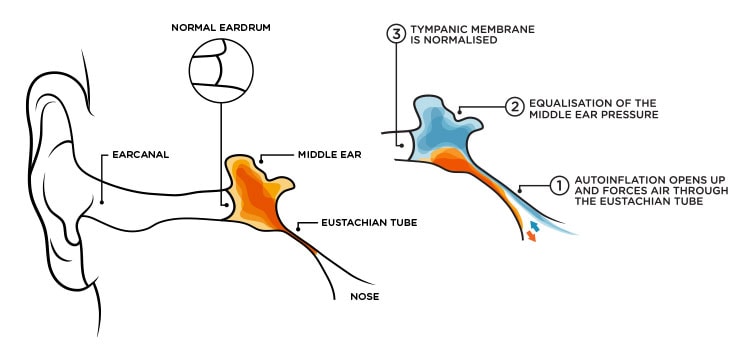
This is believed to happen because the eustachian tube, which connects the middle ear to the back of the throat and normally helps drain fluid and equalise air pressure in the middle ear, becomes blocked or doesn’t function properly.
As a result, fluid collects behind the ear drum instead of draining away. Glue ear is especially common in children, with up to 80% estimated to experience it before the age of 10, but can affect people of all ages. It often develops after a cold or ear infection and may come and go over time.
Which Symptoms Should I be Looking For?

Dulled Hearing

Social Isolation

Speech & Language Problems

Selective Hearing

Clumsiness or Balance Problems

Using a Louder Volume
Treatment
GP
You should consult your GP if you notice your child’s behaviour matching the symptoms. If your GP suspects glue ear as the cause they will likely ask you to observe a “watch and wait” or “monitoring and support” period. This happens because up to 50% of glue ear cases will spontaneously resolve without treatment.
%
50% of glue ear cases will spontaneously resolve without treatment
Audiologist
If your child’s symptoms persist your GP will refer you to an Audiologist. Using a tympanometry test the Audiologist will diagnose glue ear. At the point of diagnosis, you will likely be asked to continue the active observation period. If the condition persists after this, they will either recommend you use Otovent or refer you to an ENT surgeon for grommet surgery. Otovent is available for your GP or Prescribing Audiologist to prescribe.

Watch and Wait / Active Observation
The wait for a diagnosis can be very frustrating. The desire for treatment is of course made especially urgent if your work and social life are suffering. The Otovent auto inflation device is available over the counter at your local pharmacy. You can also purchase it online. Otovent is the only clinically effective drug-free treatment for Glue Ear.
What is Otovent?
Drug-free and non-surgical, Otovent is an autoinflation device. The balloons included in the kit are specially pressurised to open the eustachian tube when inflated via the nose. This process allows the fluid associated with glue ear to safely drain away. Referring to clinical trials conducted on children diagnosed with glue ear, NICE recommend that auto-inflation is tried during the watch and wait / active observation period.
What Causes Glue Ear?
While doctors are not completely sure what causes glue ear, they have identified a number of factors which are believed to play a role.
For example, it often develops following a common cold or upper respiratory tract infection. This is due to excess mucus becoming trapped behind the eardrum instead of draining away. This build-up can lead to the development of the condition.
It can also follow an acute middle ear infection (otitis media).
Some also believe that allergies and environmental factors like air quality can play a role.
Children with Down’s Syndrome or cleft palate are also more prone to the condition. This is because their eustachian tubes are typically smaller or may not function as effectively. This makes it harder for fluid to drain properly.
Children in general are more prone to glue ear because their eustachian tubes are smaller and more horizontal than adults’. In turn, it is believed that the eustachian tubes shrink with age, which is why older adults can also experience the condition.